CAIVOR.
Eleven pieces. One image.
A concept launch page for a fictional cinema lens: eleven parts that assemble as you scroll, a thirteen-blade iris you close stop by stop, a rack focus with a live depth-of-field readout, a rain scene that letterboxes to 2.39:1 and a ray-traced cross-section with computed specifications.
The piece, section by section
A cinema lens you scroll: it assembles, stops down and pulls focus.
Eleven pieces. One image.
A scroll-scrubbed film: the glass elements, the iris and the barrel rings travel on one axis and seat into a finished lens, counted on a focus-scale ruler.
Light, given shape.
Thirteen blades drawn in code close from f/1.1 to f/16 over a macro plate; the f-number, the opening and the light admitted follow the scroll.
Made to be turned.
A rack focus from a crystal to a row of bulbs, with the ring angle, the distance and a thin-lens depth-of-field readout.
Night, without disguise.
A rain street that letterboxes to 2.39:1 with a running timecode and a camera slate.
Nothing hidden.
A cross-section traced through the lens prescription at three field angles, and thirteen specifications computed from it.
Made honestly
CAIVOR is fictional and the Velurne 50 is not a product — nothing is for sale. The films and stills were generated with Google Veo, Gemini Omni and Nano Banana in Google Flow; the iris, the readouts, the cross-section and every number are code. In the promo video the browser window, cursor and captions are drawn; the page is a frame-by-frame capture of the real site.
More from the collection
Keep exploring.
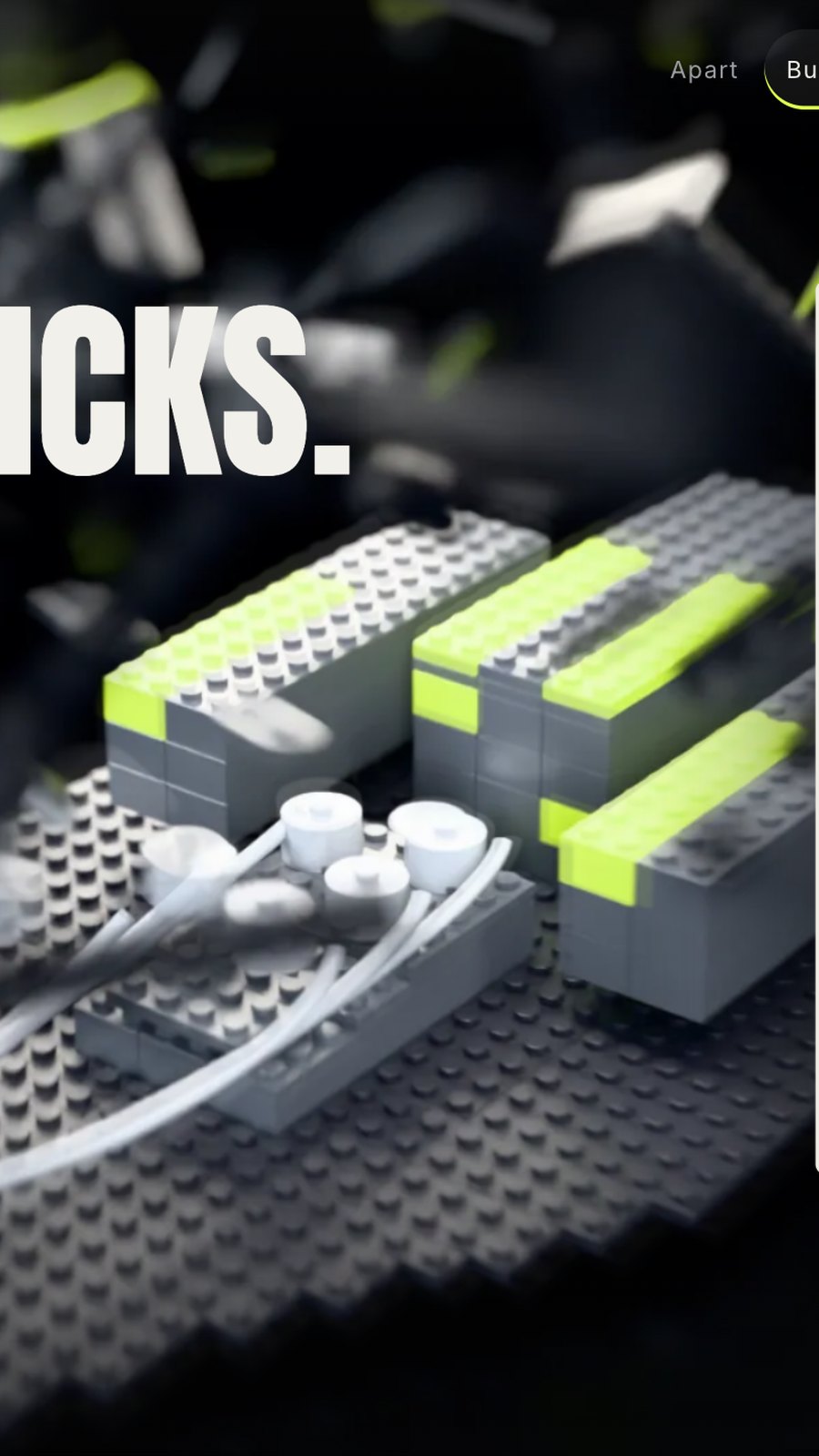
RS-01
A fictional brick-built race car kit: your scroll lets the finished car go into its 1,622 pieces and builds it back, brick by brick, under a camera viewfinder.
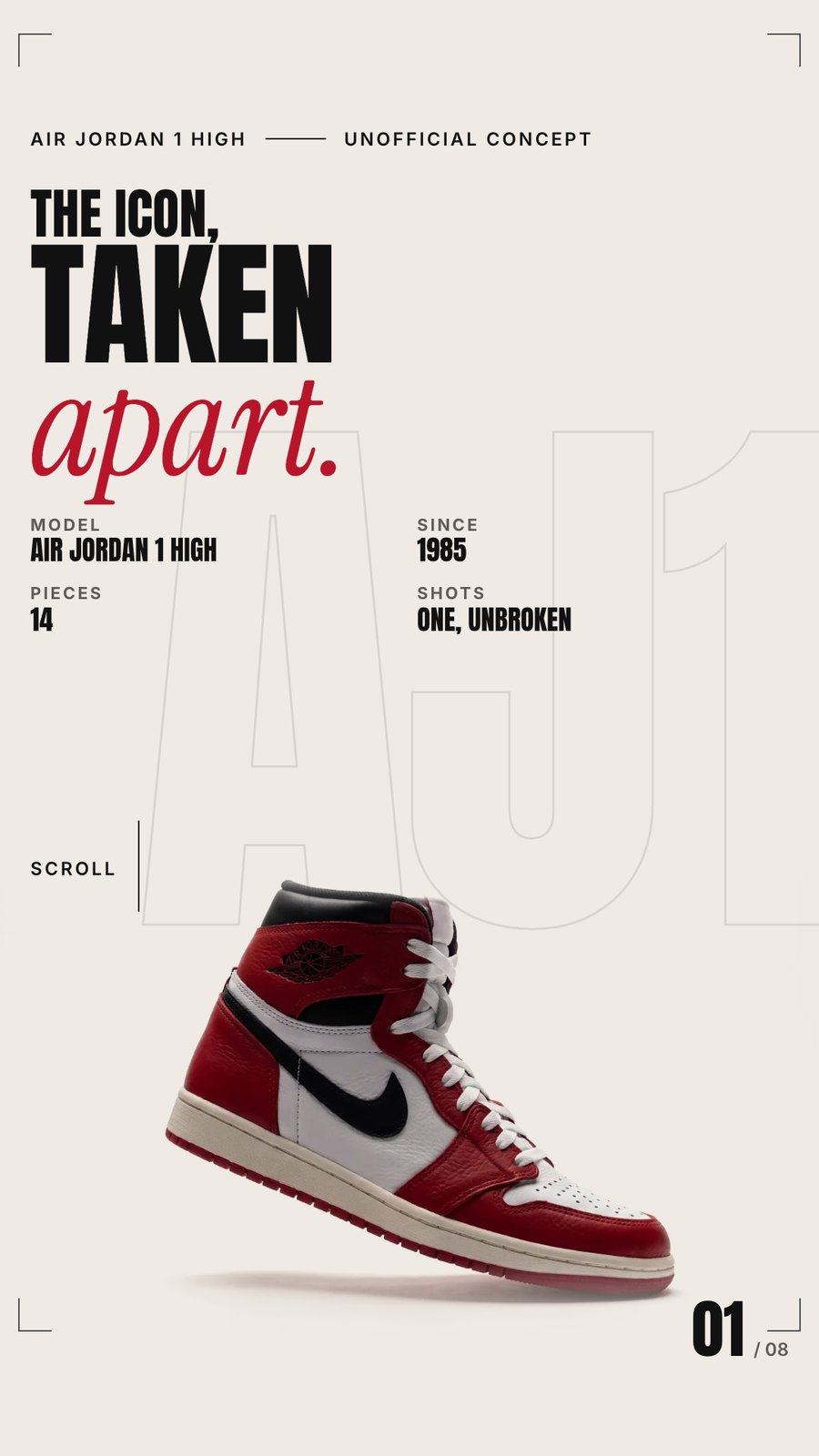
AJ1
An unofficial redesign of the Air Jordan 1 page: the scroll takes the shoe apart panel by panel, sews it back together and lines up its colourways.
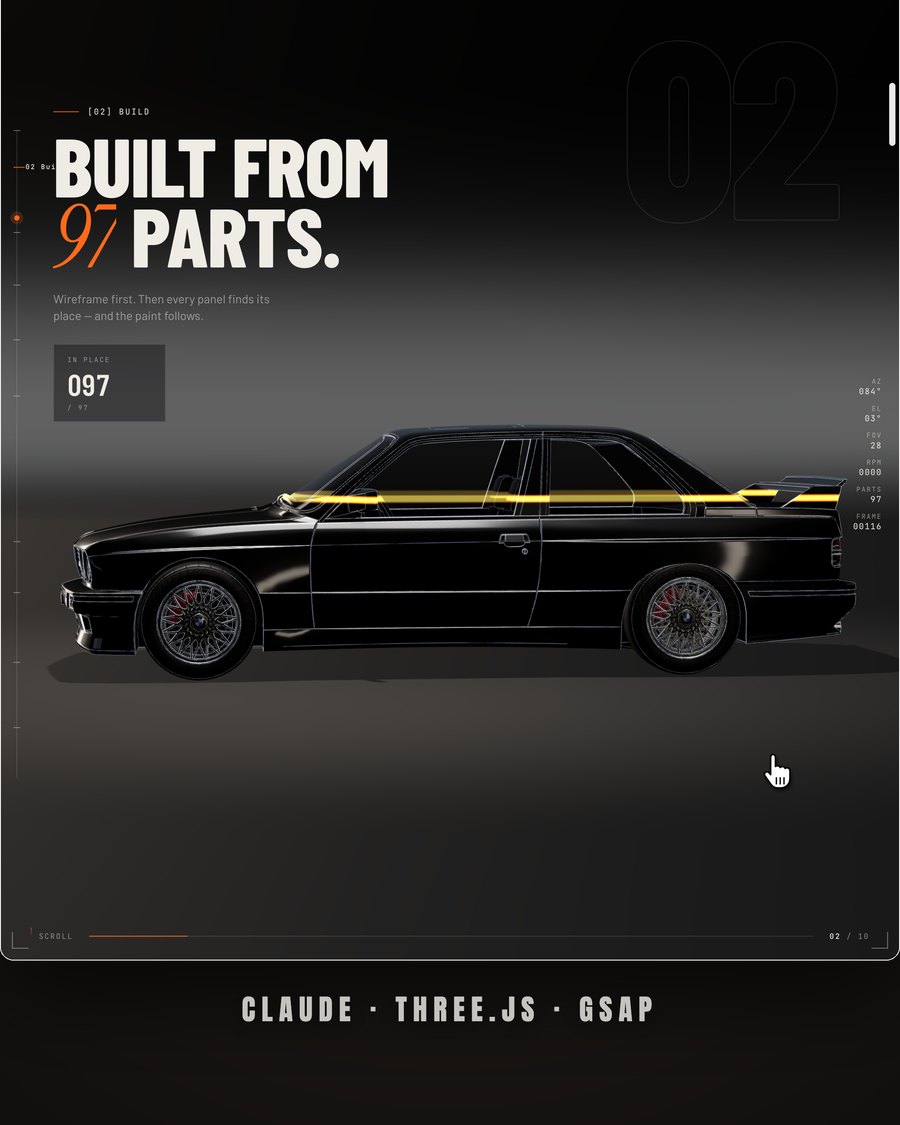
M3 E30
An unofficial fan concept for the original M3, where nothing on the page is a video: every frame is rendered live in the browser.
Next · DOMVYBE / 14